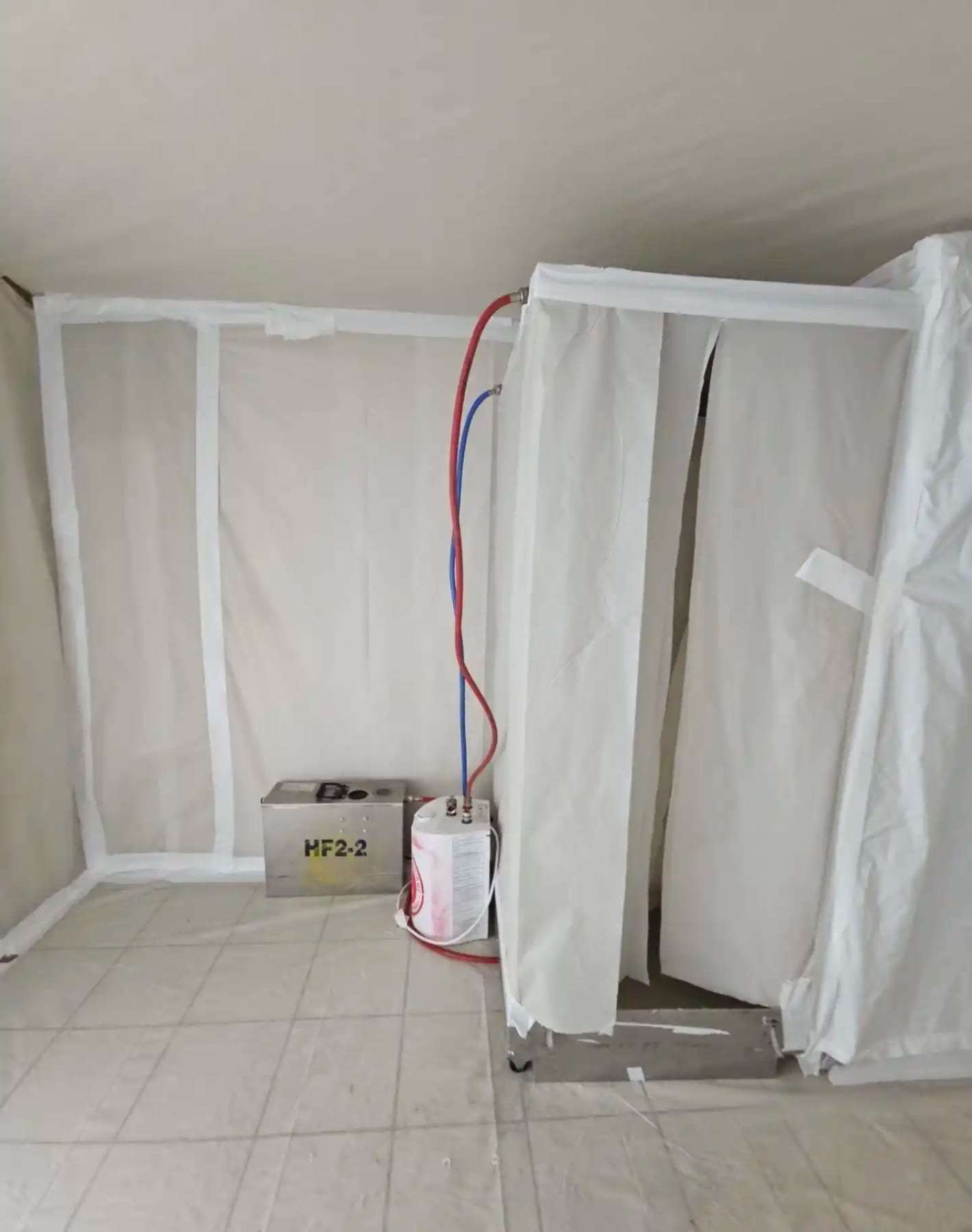
Plastic containment chamber built inside a room with the flooring removed. One example of what this stage can look like; it is not a job connected to this site.
Source, containment and removal
- Names the moisture source and states who is repairing it and when
- Lists each affected room and wall, with approximate dimensions of removal
- Describes containment: plastic walls, zipper or flap entry, sealed vents and floor protection
- States whether negative air pressure with HEPA filtration will be used and where it will exhaust
- Identifies which HVAC systems will be off or isolated
- Specifies materials to be removed, such as drywall to a set height, insulation, carpet and pad or cabinets
- Explains how debris will be bagged and the route it will take out of the house
Cleaning, drying, verification and rebuild
- Describes cleaning of remaining framing and surfaces, including HEPA vacuuming
- Includes drying equipment and the moisture levels that must be reached before closing walls
- States how hidden growth discovered during work will be documented and approved
- Notes whether contents in the area are moved, cleaned or left for a specialist
- Addresses post-remediation verification and whether an independent assessor is welcome
- Clarifies whether rebuild is included, and to what finish level
- Lists the photos and written report you will receive at completion
Vague wording to clarify
- Wording in a scope
- Treat affected areas
- Question to ask
- Treat with what, and will contaminated material be removed rather than sprayed?
- Wording in a scope
- Remove as needed
- Question to ask
- Who decides what is needed, and will I see readings and photos first?
- Wording in a scope
- Antimicrobial application
- Question to ask
- Is this in addition to physical removal and cleaning, and why is it needed here?
- Wording in a scope
- Standard containment
- Question to ask
- What exactly does standard mean for this room and this HVAC layout?
- Wording in a scope
- Clearance by contractor
- Question to ask
- Can an independent assessor do the clearance instead?
Common questions
- Is it a bad sign if a scope does not name the moisture source?
- It is a gap worth closing. A contractor may not be the one fixing the source, but the scope should at least state what caused the growth and note that the area will not be rebuilt until it is corrected.
- How detailed should a scope be for a large home?
- Detailed enough that someone who has never seen the house could understand which rooms are involved, what will be removed, how the area will be isolated and what you will receive at the end. Room-by-room line items make two estimates much easier to compare.
- Can I ask for changes to the scope before signing?
- Yes. Requests such as adding an independent clearance check, specifying floor protection along a debris route or clarifying how built-ins will be handled are reasonable and are easier to settle before work starts than in the middle of the job.
General information for Cherry Hills Village, not a quote or professional advice. In an emergency, call 911.