Many large custom homes in Cherry Hills Village and nearby Greenwood Village were built with more than one heating and cooling system, or with a single system split into zones by dampers. That arrangement keeps a big house comfortable, but it complicates mold work. Every return grille is an opening that can draw dust from a work area into ductwork and distribute it somewhere else.
The basic idea of containment is simple: seal the work area, keep it under slightly lower air pressure than the rest of the house, and filter the air leaving it through HEPA filters. In a home with several systems, getting that right means knowing which equipment serves which rooms and which returns pull from near the affected area.
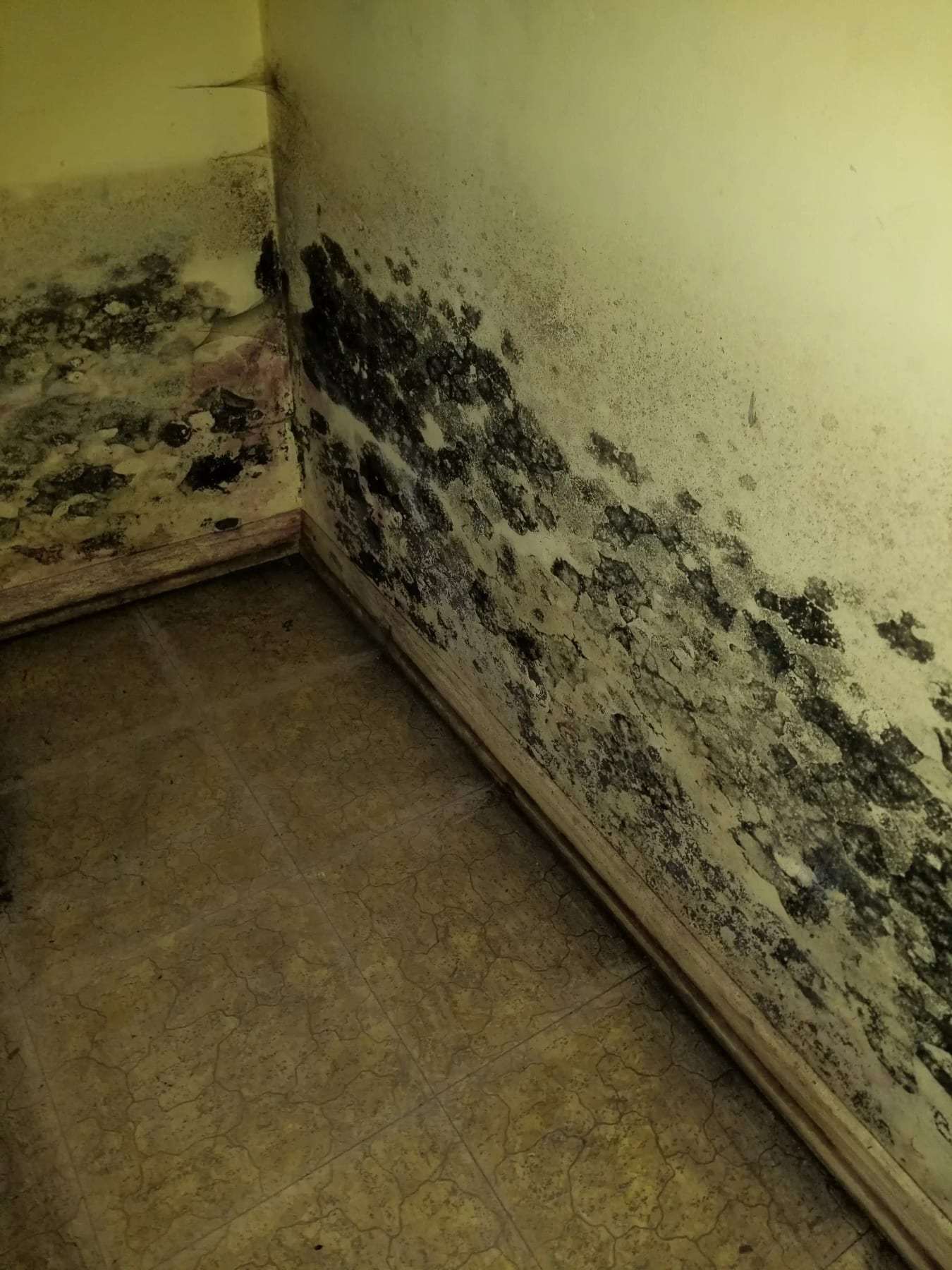
Black mold spotting across two walls and the floor of a small room. A general example of this kind of work, not a photo of a particular home, business or job.
Single system versus multiple systems during remediation
One furnace, simple ductwork
- One air handler to shut down or protect during removal
- Fewer return grilles to seal
- Easier to confirm that no ducts pass through the containment
- Duct inspection, if needed, covers one system
Several systems or zoned ductwork
- Each air handler serving or passing near the work area needs a decision: off, sealed or filtered
- Returns in hallways and stairwells may draw from the affected floor
- Duct runs may cross through a contained room inside a ceiling or soffit
- A mechanical contractor familiar with the layout can save guesswork
Questions to settle before the plastic goes up
Ask the remediation contractor to walk through these with you, ideally with the HVAC drawings or a technician who knows the equipment.
Map which system serves the area
Identify the air handler and every supply and return opening in or near the affected rooms.
Decide what runs during work
Systems serving the work area are usually shut off or isolated; other zones may keep running so the house stays livable.
Seal openings inside containment
Supply and return grilles inside the work area are covered and taped, and any duct passing through is checked for gaps.
Check filters and coils afterward
Filters on affected systems are often replaced after the work, and a coil or drain pan with visible growth is cleaned by a qualified HVAC technician.
Ask before you sign
- Which of the home's systems will be shut down during work, and for how long?
- How will the returns nearest the work area be sealed?
- Will you check whether any duct passes through the contained space?
- Who will replace filters afterward, and on which units?
- If you find growth in the equipment, will you stop and show me before proceeding?
Common questions
- Should I have all the ducts cleaned after mold removal?
- Not automatically. Duct cleaning makes most sense when there is visible growth or debris in the ductwork or the system was running during an uncontained disturbance. Ask what evidence supports it.
General information for Cherry Hills Village, not a quote or professional advice. In an emergency, call 911.