The job and the surprise
Illustrative example. Not a real job or customer.
A homeowner hires a remediation contractor to remove a section of moldy drywall in a basement media room, where a foundation crack had been seeping. The written scope covers one wall, removing drywall to two feet above the floor.
- Once the drywall is removed, the crew finds that growth continues around the corner into a storage closet behind a built-in cabinet.
- Work stops at the planned boundary, and the crew takes moisture readings and photos of the newly exposed area.
- The contractor sends the photos and readings to the homeowner with a written change describing the additional removal.
- The homeowner asks for an explanation of why the extra area is affected and how far it is likely to go.
- After approval, the containment is extended to include the closet, and removal continues.
- The foundation crack is sealed by a waterproofing contractor before rebuild.
The job takes longer and costs more than the first estimate, but the homeowner understands why and has records of every change.
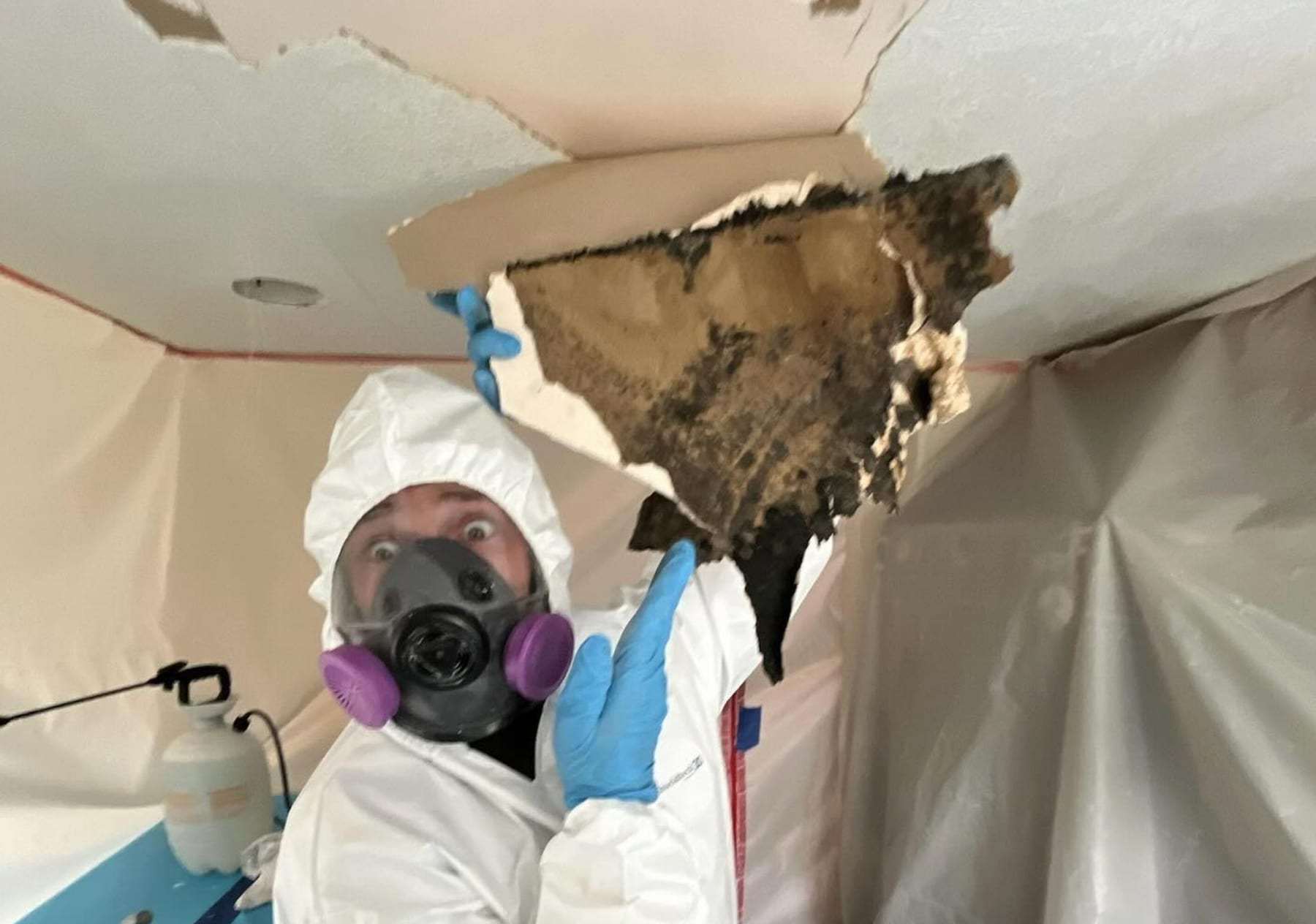
Technician in a respirator inside containment pointing at a moldy ceiling opening. This photo illustrates the topic and is not from any address mentioned on this page.
How the change was documented
- Record
- Photos of the opened wall
- What it showed
- Growth continuing around the corner
- Record
- Moisture readings
- What it showed
- Wet framing extending into the closet
- Record
- Written change
- What it showed
- Additional area, materials and time
- Record
- Owner approval
- What it showed
- Date and agreement before work continued
- Record
- Final report
- What it showed
- Total area removed and the clearance result
Questions to settle before your own job starts
- If you find more growth, will you stop and show me before going further?
- How will additional work be priced?
- Will the containment be extended before more material is removed?
- Who decides whether a hidden area is affected enough to remove?
Common questions
- Is it normal for remediation to find more mold than expected?
- It happens fairly often, because the room side of a wall can look clean while the back of the drywall or the framing is affected. Good moisture mapping before work starts reduces surprises but cannot eliminate them, which is why the contract should spell out how changes are handled.
- How can a homeowner tell whether a scope change is justified?
- Ask to see what the crew sees: photos of the newly exposed area, moisture readings compared with dry areas, and a clear description of what will be removed. If you are still unsure, an independent assessor can look at the opened wall before more material comes out.
- What if the homeowner cannot be reached when hidden growth is found?
- Agree in advance that work stops at the planned boundary and the containment stays sealed until someone with authority approves the change. That pause costs little and avoids disputes later.
General information for Cherry Hills Village, not a quote or professional advice. In an emergency, call 911.